
Top 10 Concrete Batching Plant Suppliers in 2026: Global Buyer’s Guide

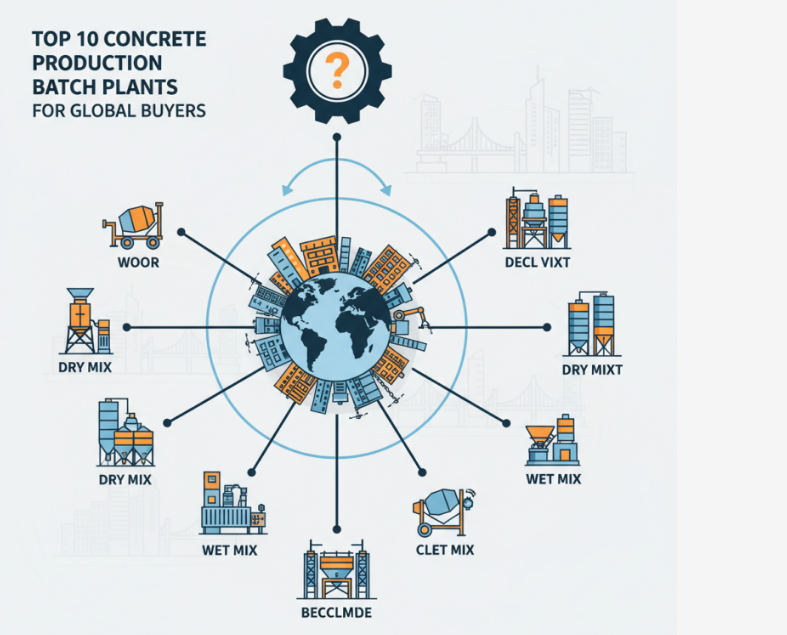
Introduction: Why Supplier Selection Defines Project Success
In modern construction, a concrete batching plant is the operational core of any infrastructure project. In 2026, global demand for high-performance batching systems continues to grow rapidly. Choosing the right machinery manufacturer directly impacts your production efficiency, material cost control, equipment lifespan, and project delivery speed. A poor procurement decision leads to costly downtime, inaccurate mixing, and significant financial loss.
Global Market Trends Shaping 2026 Procurement
The concrete engineering industry is evolving quickly due to heavy investments in urbanization across North America, Southeast Asia, and Europe. Three major forces define the market today:
- Automation & IoT Control: Modern plants integrate PLC control systems, wireless IoT sensors, and cloud-based aggregate monitoring to optimize material usage and eliminate human error.
- Sustainability & Eco-Compliance: Strict regional environmental policies (such as EPA in the US and Euro 6 guidelines) drive the demand for zero-emission dust filters, wastewater recycling, and energy-efficient twin-shaft mixers.
- Modular & Mobile Systems: Fast-deployment mobile concrete plants are now essential for remote infrastructure projects like highways, airport runways, and high-speed rail links.
Evaluation Criteria for Selection
This industrial ranking evaluates commercial concrete plant brands based on engineering durability, automation level, global spare parts availability, international certifications (CE, ISO, OSHA, ANSI), and actual total cost of ownership (TCO).
Top 10 Concrete Batching Plant Suppliers in 2026
1. European High-Precision Engineering Giants (e.g., Liebherr, Ammann)
Industry leaders for ultra-high accuracy batching systems and Industry 4.0 software integration. These brands utilize advanced twin-shaft mixers that guarantee perfect homogeneity for premium ready-mix and precast concrete operations.
2. Cost-Effective Asian Manufacturers (e.g., Sany, Zoomlion)
Strong high-value suppliers offering heavy-duty equipment at competitive market pricing. These plants are heavily deployed across fast-growing construction sectors in Southeast Asia, Africa, and Latin America due to their rapid manufacturing turnaround.
3. Mobile & Compact Plant Specialists (e.g., ELKON, Fibo Intercon)
Focused entirely on fast-installation modular designs and containerized mobile batching units. Perfect for temporary projects or urban jobsites where space is highly constrained and moving costs must be kept low.
4. High-Capacity North American Heavyweight Brands (e.g., Vince Hagan, RexCon)
Specialized in massive stationary plants with extremely high hourly output capacity. Built with heavy-gauge American steel, these units are engineered for mega infrastructure projects requiring uninterrupted concrete pouring.
5. Green Technology Innovators
Suppliers focusing exclusively on sustainable concrete production. Their machinery handles recycled aggregates and low-carbon cement formulas without losing structural strength, satisfying strict regional green building quotas.
6–10. Regional Powerhouses (Turkey, India, Japan, South Korea, Eastern Europe)
This group includes dynamic manufacturers offering regional support, custom engineering, and reliable automation. Turkey and India have become global hubs for exporting mid-tier, reliable batching units that balance price and long-term durability.
Supplier Comparison Matrix
| Plant Category | Capacity Range | Automation Type | Primary Advantage | Best Regional Fit |
|---|---|---|---|---|
| EU Premium | 60 – 240 m³/h | Fully Automated / AI | Extreme precision & lifespan | Europe, North America |
| Asia Value | 25 – 180 m³/h | Semi / Fully Automated | Low initial capital expense | Asia, Middle East, Africa |
| Global Mobile | 40 – 120 m³/h | Advanced Semi-Auto | Fast setup (under 48 hours) | Remote Infrastructure Sites |
| US Heavy Duty | 100 – 450 m³/h | Fully Automated PLC | Massive commercial volume | Americas, Global Mega-Projects |
| Eco-Innovator | 50 – 150 m³/h | Smart Sensor Systems | Zero-waste & low carbon | Strict Environmental Zones |
Critical Purchasing Factors for Buyers
- Batching Accuracy: Minor deviations in cement or moisture control degrade structural safety and increase material costs. Look for precision load cells.
- Local Spare Parts Supply Chain: Avoid suppliers without regional parts warehouses. Waiting weeks for a replacement hydraulic valve can ruin a project deadline.
- Total Cost of Ownership (TCO): Do not just look at the initial quote. Energy consumption, maintenance schedules, and wearing parts costs dictate long-term profit margins.
Common Procurement Mistakes to Avoid
- Buying Soles on Price: Cheap steel frames distort under constant vibration, leading to premature gear box and mixer failures.
- Oversizing the Equipment: Operating a 120 m³/h plant at only 30% capacity wastes energy, drives up cleaning overhead, and lowers your overall ROI.
Industry Outlook: What is Next?
The next generation of batching plants will focus on:
AI-driven production optimization
Carbon-neutral concrete systems
Remote monitoring and diagnostics
Modular construction integration
Predictive maintenance technology
Suppliers that fail to innovate will gradually lose global competitiveness.
Conclusion
Selecting a concrete batching plant supplier is a long-term strategic investment. The 2026 market offers tailored options for every budget and regional climate constraint. Align your choice with your local environmental laws, daily volume targets, and available maintenance technical skill sets to ensure steady commercial growth.
Frequently Asked Questions (FAQ)
Q1: How long does a commercial concrete batching plant last?
A: A high-quality plant lasts between 10 to 20 years, depending on the maintenance quality, aggregate abrasiveness, and regular replacement of wear-resistant liner plates.
Q2: Should I buy a mobile or a stationary concrete plant for highway construction?
A: Mobile batching plants are ideal for highway construction. They allow you to shift the production site closer to the advancing paving front, reducing concrete haul times and truck fuel costs.
Q3: What certifications should I check before finalizing an overseas supplier?
A: Ensure the equipment carries CE marking for European markets, UL/ANSI compliance for electrical systems in North America, and ISO 9001 certification for manufacturing quality management.
Request Technical Blueprints & Factory Quotes
Submit your machinery parameters below. Connect directly with verified, certified heavy industrial manufacturers to receive custom foundation drawings, layout schematics, and direct-from-factory pricing.