
How to Buy A Cost-Effective Trailer Pump
An expert engineering sourcing manual detailing trailer concrete pump specifications, component lineages, wear alloys, and contract risk controls.

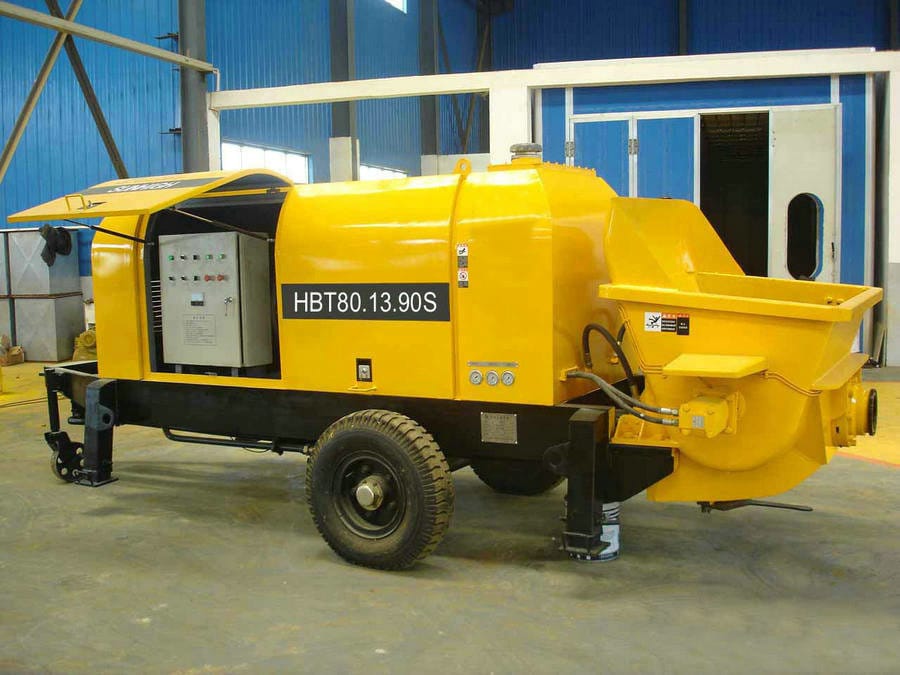
Sourcing a cost-effective concrete trailer pump—whether deploying a compact line pump for low-slump residential pours or a high-pressure rock-pump array for high-rise commercial structures—requires moving past initial capital expenditures (CAPEX) to calculate multi-year fluid power operating costs (OPEX) [INDEX]. Purchasing low-tier, unbranded machinery blocks frequently triggers immediate hydraulic pump cavitation, rapid cutting ring wear, and premature cylinder wall scoring, transforming a cheap upfront deal into an ongoing cash drain [INDEX]. [1, 2]
This independent procurement manual breaks down the precise mechanical configurations, hydraulic component lineages, and legal contract safeguards required to buy an elite, cost-effective concrete trailer pump assembly [INDEX].
The 3 Definitive Technical Pillars of Trailer Pump Value
To protect your equipment investment from site-level disruption, your engineering advisory board must evaluate three independent mechanical and fluid sub-systems before signing a purchase order.

1. Robotically Applied Tungsten-Carbide Hardfaced S-Valve Loops
The core shifting assembly inside the receiving hopper is the final defense line against pressure loss. Sourcing agents must avoid standard hardened carbon-steel components.
- The Metallurgy Edge: Mandate a trailer pump outfitted with a spectacle wear plate and cutting ring featuring robotically applied Tungsten-Carbide (WC) hardfaced inlays pushing surface hardness past 70 HRC (Rockwell Hardness). This configuration extends the component degradation lifespan past 50,000 m³ of continuous aggregate pours before requiring field plate overhauls, cutting structural maintenance downtime by half.
2. Variable-Displacement Axial Piston Closed-Loop Hydraulics
Legacy concrete trailer pumps utilize low-cost, fixed-displacement gear pumps that continuously dump large fluid volumes through manual relief valves during line blockages, causing severe oil thinning and rapid seal melting.
- The Efficiency Loop: Specify a system configured with a variable-displacement axial piston hydraulic pump equipped with automated pressure-compensation and horsepower-limiting controls (such as a Bosch Rexroth A4VG or Kawasaki series). The pump automatically monitors system duress; if pipeline friction spikes near your 32.0 MPa limits, the pump automatically de-strokes and drops its volumetric flow rate to near zero. This protects the engine from stalling and extends hydraulic seal life by 300%.
3. Integrated Dual-Power System Redundancy Profiles
- The Power Runway: Evaluate whether your project pipeline requires a high-torque, Tier-4 compliant diesel engine block (best for remote off-grid infrastructure loops) or a high-efficiency 3-phase electric motor drive (best for zero-emission metropolitan tunnels). Premium cost-effective lines now offer dual-power setup frames, enabling rapid interchangeability between electric and diesel prime movers to secure high asset salvage values across multiple project formats.
Technical Specifications: Sourcing Metrics & Fluid Boundaries
The metrological specification matrix below outlines the strict physical parameters, pressure metrics, and dimensions required to verify trailer pump contract compliance.
| Specification Item | Premium Infrastructure Configuration | Mid-Market Standard Configuration | Precision Diagnostic Tool |
|---|---|---|---|
| Peak Concrete Pumping Pressure | 7.0 MPa to 12.0 MPa (70-120 bar) | 4.0 MPa to 6.0 MPa (Low Sizing) | Glycerin-Damped Line Gauge |
| Hydraulic System Working Loop | 28.0 MPa to 32.0 MPa (280-320 bar) | 18.0 MPa to 22.0 MPa (Gear Pump) | Inline High-Pressure Transducer |
| Shifting Accumulator Pre-Charge | 10.0 MPa to 14.0 MPa (N₂ Gas) | < 6.5 MPa (Total Shock Loss) | Gas Charging Kit with Tester |
| Material Cylinder Liner Alloy | Chrome-Carbide Structural (65+ HRC) | Hardened Carbon Steel (45 HRC) | Ultrasonic Thickness Gauge |
| S-Valve Sealing Clearance Gap | 0.5 mm to 1.0 mm (Adjustable) | > 2.0 mm (Fixed / Rapid Leaks) | Carbon Steel Metric Feeler Gauge |
Global Supply Chain Contract Risk Safeguards
When executing a procurement contract with an overseas heavy machinery factory (such as Sany, Putzmeister, Schwing, or Haomei), your supply chain division must enforce two strict contract-level safeguards:
- Component Lineage Lock-In Clause: Explicitly hardcode in the purchase order that all core auxiliary valves and electrical relays must utilize globally distributed lineages. Mandate Rexroth main control spool valves, Schneider Electric switches, and AirTAC pneumatic components. This ensures your site mechanics can source replacement wear seals from local industrial supply stores, completely bypassing long air-freight customs clearance bottlenecks.
- Automated Progressive Central Lubrication Upgrade: Ensure the contract states that the outer spline drive shaft and slewing bearings of the S-valve are connected to an automated progressive grease distribution manifold operating at 20-30 MPa. Continuous positive grease pressure pushes out sand particles before they can pass the primary rubber lip seals and grind into the bronze bushings, reducing unplanned mechanical seizures by 90%.
Advanced Procurement FAQ
Q1: Why do diesel-driven trailer pumps command a higher initial CAPEX than electric-driven trailer units?
A1: Diesel-driven concrete trailer pumps require an independent common-rail electronic fuel-injection engine block complete with integrated cooling radiators, heavy starter battery arrays, vibration-dampening sub-frames, and specialized exhaust mufflers.
This significantly elevates initial capital expenditure (CAPEX). However, they deliver absolute mobility independence. Electric units carry a lower entry CAPEX but remain completely dependent on a continuous, high-amperage 384V to 415V AC utility transformer line or heavy on-site diesel generators, which limits their runtime versatility on remote fast-track infrastructure corridors. [1]
Q2: How does an integrated hydraulic cleansing wash pump system optimize trailer pump lifecycle costs?
A2: Leaving residual concrete cement slurry inside the material cylinders or the valve hopper after a shift causes flash-hydration, which rapidly destroys polyurethane piston cups and scores chromed walls during subsequent startups. Sourcing a trailer pump equipped with an integrated high-pressure, hydraulic-driven water pulse pump (delivering 40 to 60 L/min at 10 MPa) enables rapid cleaning loops. The operator can blast clean the internal mixing arms, S-valve, and pipeline joints in under 5 minutes, dropping manual cleanup labor overhead and extending wear-part lifecycles.
Request Technical Blueprints & Factory Quotes
Submit your machinery parameters below. Connect directly with verified, certified heavy industrial manufacturers to receive custom foundation drawings, layout schematics, and direct-from-factory pricing.