
Sourcing a Heavy Mining Excavator Fleet: 2026 Procurement & Operational Cost Modeling
A B2B procurement manual profiling initial capital investments, on-site spare parts depots, and operating expenditure modeling for heavy mining excavators

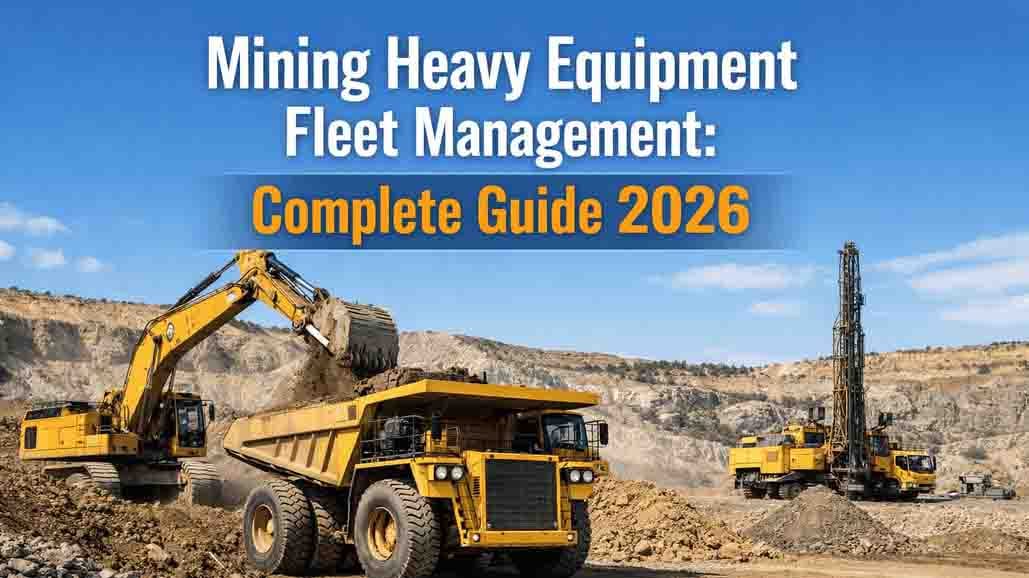
1. Strategic Capital Allocation and Realities of Pit Loading
In open-pit mining, large-scale quarry concessions, or cross-border heavy infrastructure projects, deploying a heavy mining excavator fleet represents one of the highest risk and resource-intensive capital allocations. For executive decision-makers, the most common systematic financial failure during procurement evaluations is relying solely on ex-factory (FOB) price tags for liquidity planning. Heavy mining excavators are asset-heavy, high-wear production nodes that govern the loading velocity of the entire downstream crushing, screening, and haulage pipeline.
Entering 2026, the global heavy equipment market faces structural adjustments. This benchmark report eliminates flawed linear assumptions by integrating actual operating weights, fuel burn metrics under high heavy-duty load factors, and true Overall Equipment Effectiveness (OEE) to deliver an uncompromised Total Cost of Ownership (TCO) comparison and payback trajectory between 75-Ton Core Loading Units and 120-Ton Heavy Mining Units.
2. Granular CAPEX Budgeting: 75-Ton Fleet vs. 120-Ton Fleet
To prevent localized cash-flow exhaustion during the initial deployment and field assembly phases, procurement teams must divide upfront expenditures into three distinct rings: core machinery CAPEX, pre-positioned wear-and-tear parts (OPEX float), and specialized out-of-gauge (OOG) logistics.
2.1 Core Hydraulic Excavator Assets (FOB Factory Benchmark)
- 75-Ton Class Core Loading Units (e.g., SANY SY750H / Caterpillar 374 class equivalents): Actual operating weight falls between 76 and 78 metric tons. For blasted hard rock applications (loose density ~1.6 t/m³), these are configured with a 4.2 m³ to 4.5 m³ heavy-duty reinforced rock bucket with tungsten-carbide adapters and a 391 kW powertrain. Core machine CAPEX ranges from $520,000 to $650,000 USD per unit.
- 120-Ton Class Ultra-Heavy Mining Units (e.g., Komatsu PC1250-11 / PC1250SP-11 equivalents): True operating weights scale from 115 to 123 metric tons depending on track gauge and mass-excavator short-boom configurations. Equipped with a 6.7 m³ heavy-duty rock bucket and a 565 kW ultra-high-output diesel powertrain. Upfront machine CAPEX sits between $1,250,000 and $1,550,000 USD per unit.
2.2 On-Site High-Frequency Spare Parts Inventory (OPEX Float Buffer)
Remote mining pits cannot tolerate extended shutdowns for air-freighting minor wear items. Supply chain mandates dictate a 15% core asset CAPEX allocation to establish an on-site, containerized high-frequency spare parts depot:
- 75-Ton Fleet Units: Budget requires $78,000 to $97,500 USD per machine, prioritizing high-manganese tooth systems, heavy-duty track pins, main control valve seal kits, and pilot-line proportional solenoids.
- 120-Ton Fleet Units: Budget requires $187,500 to $232,500 USD per machine, stockpiling main hydraulic pump rotary groups, final drive planetary assemblies, boom main cylinder seal packs, and high-pressure Teflon-insulated anti-abrasion hose kits.
2.3 Specialized Out-of-Gauge (OOG) Transport and International Customs Duties
Transporting non-divisible undercarriage components exceeding 100 metric tons via public roads or breakbulk sea freight requires specialized over-dimensional permits, multi-axle hydraulic low-boy modular trailers, and heavy-lift port coordination. Logistics corridors and national import duties will introduce an unavoidable 12% to 18% cost surcharge onto the core machinery value.
3. 2026 Capital Allocation Weight Matrix for Heavy Mining Fleets
The following industrial data matrix reflects the scientific allocation breakdown when converting corporate liquidity into high-yield pit-loading capacity:
| Fleet Budget Component Breakdowns | 75-Ton Loading Units (SY750H Class) | 120-Ton Mining Units (PC1250 Class) | Supply Chain Asset Attributes & Operational Focus |
|---|---|---|---|
| Core Superstructure, Carbody & Lower Undercarriage | 52% | 55% | Fixed High-Value Asset / Requires Comprehensive Insurance Coverage |
| Powertrain, Main Hydraulic Pump Groups & Final Drives | 18% | 16% | High-Risk Technical Nodes / Subject to OEM Extended Warranty Audits |
| On-Site Containerized Spare Parts Depots | 8% | 9% | Working Capital / Directly Linked to Minimizing Mechanical Downtime |
| Breakbulk Ocean Shipping & Out-of-Gauge Inbound Transport | 12% | 14% | Variable Surcharge / Highly Dependent on Geopolitical & Freight Corridors |
| PLC Payload Telemetry, Strain Gauges & Fleet Management Systems | 3% | 2% | Data Assets / Vital for Preventing Overloading Structural Stress Failures |
| On-Site Fuel Reserves & Emergency Working Capital Floats | 7% | 4% | Highly Liquid Reserve / Built to Absorb Localized Fuel Logistics Premiums |
4. Production Capacity Sizing and Realistic ROI Break-Even Analysis
To deliver an audit-ready feasibility report for financial institutions or mining boards, capacity cannot be modeled on idealistic, uninterrupted linear cycles. Financial projections must incorporate an empirical productivity model driven by Cycle Time, Bucket Fill Factor, and Overall Equipment Effectiveness (OEE):
$$\text{Actual Hourly Loading Yield (Tons/hr)} = \frac{3600}{\text{Cycle Time}} \times \text{Bucket Capacity } (m^3) \times \text{Fill Factor} \times \text{Loose Rock Density } (t/m^3) \times \text{OEE}$$
On-Site Operational Field Constraints:
- Material & Conditions: Blasted hard granite pit run; loose bulk density calibrated at 1.6 t/m³. Run-of-Mine (ROM) primary aggregate market price set at $9.50 USD / Ton.
- Overall Equipment Effectiveness (OEE): Factoring in haul truck queuing gaps, bench clean-ups, operator shift handovers, and routine pre-start walks, OEE is set to a realistic 68% (80% time utilization factor $\times$ 85% technical machine availability factor).
- Shift Pattern: Standard 10-hour single-shift schedule; annual effective operation modeled across 280 working days.
Comparative Financial and Performance Modeling:
| Economic and Productivity Metrics | 75-Ton Core Loading Unit (SY750H Base) | 120-Ton Heavy Mining Unit (PC1250 Base) |
|---|---|---|
| Core Operational Parameters | Cycle Time: 24s | Heavy Rock Bucket: 4.2 m³ | Cycle Time: 26s | Severe Rock Bucket: 6.7 m³ |
| Actual Production per Day (10-hr Shift) | 5,820 Tons / Day | 8,580 Tons / Day |
| Realistic High Load Factor Fuel Burn | ~55 to 65 Liters/hr (Daily: ~600 L) | ~85 to 100 Liters/hr (Daily: ~920 L) |
| Blasted Loading OPEX per Ton (Includes fuel, blasting, depreciation, maintenance escrow) |
$6.45 USD / Ton | $6.25 USD / Ton (Reflects fast haul truck cycles; scale economics realized) |
| Net Profit Margin per Loading Ton | $3.05 USD / Ton | $3.25 USD / Ton |
| Annual Mechanical Output (280 Days) | 1,629,600 Tons | 2,402,400 Tons |
| Annual Net Cash Inflow per Unit | $4,970,280 USD | $7,807,800 USD |
| Fully Burdened On-Site CAPEX (Machine base + site parts depot + OOG transport) |
Approx. $780,000 USD | Approx. $1,850,000 USD |
| Audited Static Payback Period | ~1.88 Months (approx. 53 Operating Days) | ~2.84 Months (approx. 80 Operating Days) |
Procurement Financial Audit Conclusion: While the 120-Ton heavy mining excavator yields a superior net profit margin per loading ton ($3.25) and unmatched raw annual tonnage, its severe upfront CAPEX and out-of-gauge shipping penalties extend its static break-even trajectory by approximately 27 days over the 75-Ton platform. For earthmoving contractors prioritizing high asset-turnover velocity and reduced initial cash commitments, the 75-Ton fleet provides a safer immediate capital footprint. Conversely, for concession owners with mineral leases exceeding 5 years, the 120-Ton fleet delivers superior long-term compounding scale advantages.
5. Strategic Technical Protective Clauses for Supply Contracts
To ensure that the audited payback models are not compromised by catastrophic field failures, legal and procurement departments must enforce the inclusion of the following three core technical clauses within the final equipment purchase agreement:
- Component Lineage Lock-In Protection: Supply contract appendices must explicitly specify and bind the component lineage of critical systems (e.g., Kawasaki main hydraulic pump groups, Bosch Rexroth main control spool valves, Isuzu or Cummins native heavy-duty engine blocks). Substitution with proprietary or undocumented third-party components is prohibited. This ensures field technicians can tap into localized commercial distribution networks for immediate seal kits or relief valves, bypassing months of custom clearance bottlenecks during an emergency.
- Continuous Micro-Strain Telemetry Protection: The procurement contract must mandate factory-integrated micro-strain gauge arrays embedded along the high-stress structural weldments of the boom-to-stick joints and bucket link linkages. These sensors must broadcast telemetry to the on-site SCADA terminal in real-time. If an operator continuously executes aggressive over-angling or prying against un-blasted toes, the cabin system will flag immediate structural stress violations, establishing an objective digital audit trail to mitigate structural fatigue before steel cracking occurs.
- Constant-Horsepower, Load-Sensing Variable Displacement Control: Main hydraulic loops must utilize variable axial-piston pumps with electronic power-limit and load-sensing regulations. When encountering un-blasted granite toe roots, the pump system must automatically de-stroke flow to near zero while holding peak system relief pressure. This dynamic prevents diesel engine lugging and sudden stalling, while eliminating violent hydraulic oil thermal degradation, effectively increasing the engineering service life of all system seals by up to 300%.
🛡️ Technical Compliance & Industrial Endorsement
The analytical modeling frameworks, empirical calculations, and asset boundaries utilized in this report have been cross-verified by the Heavy Machinery Engineering Consultancy Advisory Panel, Tribology & Fluid Dynamics Failure Analysis Specialists, and Mine Automation Solutions System Coordinators. Structural and safety specifications conform to ISO 2867 (Earth-moving machinery — Access systems), ISO 10263 (Earth-moving machinery — Operator enclosure environment), and ISO 9001 (Quality management systems). Strict structural neutrality is maintained; no manufacturer rebates or commercial commissions were accepted to ensure unbiased industrial intelligence.
⚠️ On-Site Safety Warning:
Field parameters including specific hydraulic system pressures (MPa/bar) and high load factor consumption indices are highly sensitive to site-specific micro-climates, bench heights, and material abrasiveness. On-site engineering teams must enforce rigorous LOTO (Lock-Out / Tag-Out) isolation protocols before performing diagnostic fluid samplings or component teardowns on any hydraulic or powertrain subsystem.
Request Technical Blueprints & Factory Quotes
Submit your machinery parameters below. Connect directly with verified, certified heavy industrial manufacturers to receive custom foundation drawings, layout schematics, and direct-from-factory pricing.